How Fast Can Different Animals Run? Complete Speed Comparison
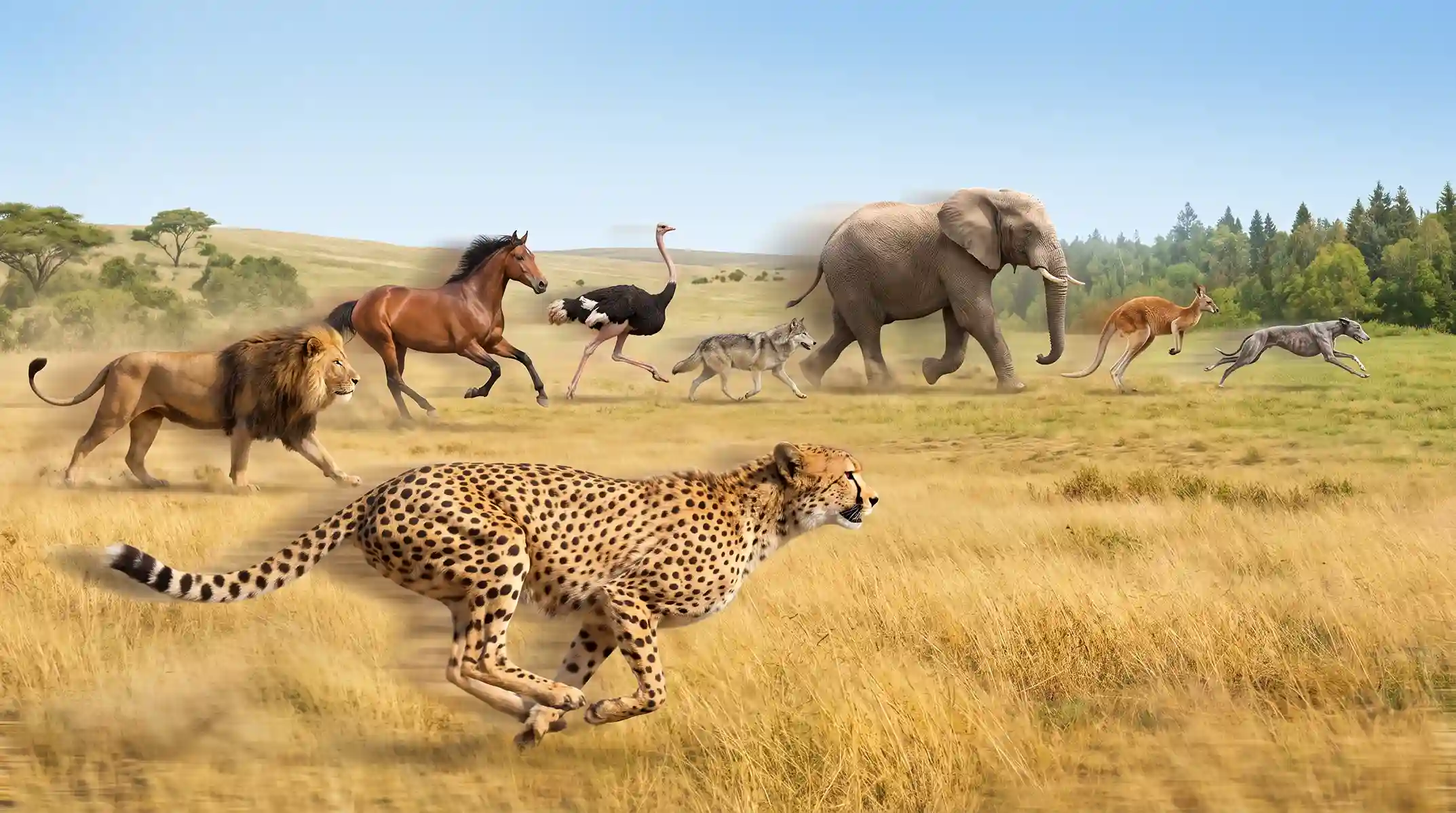
Speed is one of nature's greatest survival tools. Some animals rely on incredible speed to chase down prey, while others depend on quick acceleration to escape predators. From the lightning-fast cheetah sprinting across the African savannah to the powerful horse galloping through open fields, every species has evolved unique physical characteristics that determine how fast it can move.
Running speed is influenced by several factors, including body size, muscle strength, limb length, flexibility, habitat, and endurance. While some animals can achieve astonishing top speeds for only a few seconds, others can maintain high speeds over much longer distances. Understanding these differences helps us appreciate how animals have adapted to survive in the wild.
What You'll Learn
- Which animal is the fastest runner on Earth
- Top speeds of more than 20 different animals
- Human vs animal speed comparison
- Why some animals can run much faster than others
- Interesting facts about animal movement and evolution
Whether you're curious about how fast a lion can chase its prey, how quickly an elephant can run, or whether a human can outrun a bear, this complete guide compares the top running speeds of some of the world's most fascinating animals using kilometers per hour (km/h), miles per hour (mph), and meters per second (m/s).
Top 20 Fastest Running Animals
The table below compares the maximum running speeds of some of the world's fastest animals. Actual speeds may vary slightly depending on age, terrain, health, and environmental conditions, but these figures represent widely accepted top speeds.
| Rank | Animal | Top Speed (km/h) | mph | m/s | Typical Habitat |
|---|---|---|---|---|---|
| 1 | Cheetah | 120 | 75 | 33.3 | African Savanna |
| 2 | Pronghorn Antelope | 98 | 61 | 27.2 | North America |
| 3 | Springbok | 88 | 55 | 24.4 | Southern Africa |
| 4 | Quarter Horse | 88 | 55 | 24.4 | Domestic |
| 5 | Lion | 80 | 50 | 22.2 | African Grasslands |
| 6 | Wildebeest | 80 | 50 | 22.2 | Africa |
| 7 | Kangaroo | 71 | 44 | 19.7 | Australia |
| 8 | Greyhound | 72 | 45 | 20.0 | Domestic |
| 9 | Ostrich | 70 | 43 | 19.4 | Africa |
| 10 | Camel | 65 | 40 | 18.1 | Deserts |
| 11 | Hyena | 65 | 40 | 18.1 | Africa |
| 12 | Wolf | 60 | 37 | 16.7 | Forests |
| 13 | Giraffe | 60 | 37 | 16.7 | African Savanna |
| 14 | Black Bear | 56 | 35 | 15.6 | North America |
| 15 | Moose | 56 | 35 | 15.6 | Northern Forests |
| 16 | Rhinoceros | 50 | 31 | 13.9 | Africa & Asia |
| 17 | Domestic Cat | 48 | 30 | 13.3 | Domestic |
| 18 | Human (Usain Bolt) | 44.7 | 27.8 | 12.4 | Worldwide |
| 19 | Elephant | 40 | 25 | 11.1 | Africa & Asia |
| 20 | Goat | 24 | 15 | 6.7 | Mountains |
The Fastest Land Animal
The cheetah is widely recognized as the fastest land animal in the world, capable of reaching an incredible top speed of approximately 120 km/h (75 mph). Its flexible spine, lightweight body, long legs, and oversized lungs allow explosive acceleration that few animals can match.
Despite its amazing speed, a cheetah cannot maintain maximum velocity for very long. Most sprints last less than 30 seconds before the animal must slow down to recover.
Why Are Some Animals Faster Than Others?
Running speed depends on far more than simply having powerful muscles. Evolution has shaped each animal differently according to its environment, food sources, and survival strategy.
- Longer legs increase stride length.
- Flexible spines improve acceleration.
- Large hearts and lungs deliver more oxygen.
- Strong muscles produce explosive power.
- Lightweight skeletons reduce energy loss.
- Specialized claws or hooves improve grip.
Predators such as cheetahs and lions evolved for explosive speed to catch prey, while animals like antelopes developed endurance to escape over longer distances.
Human vs Animal Speed
Humans are excellent endurance runners but relatively slow sprinters compared with most mammals. The fastest recorded human sprint reached about 44.7 km/h, while many wild animals comfortably exceed 60 km/h.
| Animal | Top Speed | Compared to Fastest Human |
|---|---|---|
| Cheetah | 120 km/h | ≈2.7× Faster |
| Lion | 80 km/h | ≈1.8× Faster |
| Horse | 88 km/h | ≈2× Faster |
| Greyhound | 72 km/h | ≈1.6× Faster |
| Ostrich | 70 km/h | ≈1.5× Faster |
| Human | 44.7 km/h | Reference |
Interesting Facts About Animal Speed
- Cheetahs accelerate from 0–96 km/h in about 3 seconds.
- Pronghorn antelopes are among the world's best long-distance runners.
- Ostriches are the fastest birds that run on land.
- Greyhounds are the fastest domestic dog breed.
- Elephants cannot truly gallop, but they can still move surprisingly fast.
- Kangaroos conserve energy by hopping faster instead of running.
- Lions rely on short bursts of speed rather than endurance.
- Wolves can maintain moderate speeds for many kilometres while hunting.
Conclusion
Animals have evolved remarkable adaptations that allow them to survive in different environments. While the cheetah dominates as the fastest sprinter on land, endurance champions like the pronghorn antelope can maintain high speeds over much longer distances. Other animals, such as wolves, horses, and ostriches, balance speed with stamina, making them highly efficient hunters or escape artists.
Humans may not be the fastest runners, but our ability to cover long distances has helped us thrive throughout history. Whether you're comparing the speed of a lion, elephant, horse, or cheetah, nature provides countless examples of how evolution has optimized movement for survival.
If you're curious about your own speed, try our GPS Speedometer to measure your walking, running, cycling, or driving speed in real time.